


Fatigue. It’s something we’ve all felt before—maybe after a long day or tough workout. You rest, get some sleep, and feel better the next day. But if you’re a brain injury (BI) survivor, fatigue can look and feel completely different. Rest doesn’t always help and it's not something that you can just “push through”. So, let’s take a closer look at what this type of fatigue is, how it affects BI survivors, and how everyone around them can offer better understanding and support.
Not All Fatigue Is the Same
Fatigue can be hard to define because people experience it in different ways. Fatigue is experienced by everyone at some point throughout their lives. It usually happens after a period of intense physical or mental activity and is a signal from our bodies that tells us to take a break. 'Normal' fatigue can be alleviated by rest and only takes a short amount of time to recover from.
Pathological Fatigue is what many BI survivors deal with. It’s like your energy tank has a hole in it, and no matter how much you try to refill it, it keeps draining. One of the biggest challenges is that fatigue levels fluctuate, meaning it’s not the same all of the time. This can make it unpredictable and difficult to manage. The day might start off okay, but a simple errand like going grocery shopping, can bring on a sudden crash. Other times, its presence may feel constant, hovering in the background no matter what. This type of fatigue affects your whole being – physically, mentally, and emotionally.
Why Does This Happen?
Fatigue after a brain injury can be caused by damage to areas of the brain that control alertness. One area linked to fatigue is the ascending reticular activating system (ARAS), which helps maintain alertness. The ARAS connects the brainstem with the thalamus, hypothalamus, and cerebral cortex. It influences how much information the brain can process by controlling what the thalamus relays to conscious awareness.
When these systems are disrupted, your brain has to work harder just to keep you alert and functioning, which can quickly deplete your energy. While many people experience fatigue after a brain injury, the exact causes are still not fully understood. What is clear is that the brain is operating under extra strain, and that can lead to significant, ongoing fatigue.
How This Affects Relationships
Because fatigue is invisible, it’s easy for others to misunderstand it. People might make comments like, “Oh, I’m tired too” or “Must be nice to take naps all the time.” Ouch, right? These remarks, even if not meant to hurt, can be frustrating for survivors to hear and leave them feeling misunderstood.
Your family and friends might also struggle. It’s hard for them to know what to expect when your energy levels change so quickly. Partners especially may feel helpless when they see you hit by sudden fatigue. It’s tough for everyone.
"We've had many days where it has started well and without any warning, Mark is hit like a freight train with a big bout of fatigue. He starts yawning, his eyes glaze over, he loses all focus and concentration and often his speech becomes quite slurred. It can be quite scary how quickly it comes on at times and hard to plan for. Generally, the only way to cope with it is to stop doing anything that may be zapping him and try and get some quiet downtime to give his brain time to have a little recharge. So, you can see the unpredictability of living with fatigue that families go through every day and it is something very hard to take any control of and how it can be the source of despair." ~ Jules
What Can Help?
There’s no magic cure for this kind of fatigue, but there are ways to manage it. Here are a few ideas:
- Pace Yourself: Break tasks into smaller steps and rest often. Don’t wait until you’re completely wiped out to take a break.
- Prioritise Your Tasks: Focus on the most important things first. That way, if you crash, the essentials are done.
- Create a Calm Space: Quiet, low-stimulation environments can help reduce brain overload.
- Talk It Out: Open communication with your loved ones can go a long way. Explain what fatigue feels like and how they can support you. It helps them understand that it’s not laziness—it’s a real, physical challenge.
- Get Professional Help: Occupational therapists or fatigue specialists can give you tailored advice to manage your symptoms.
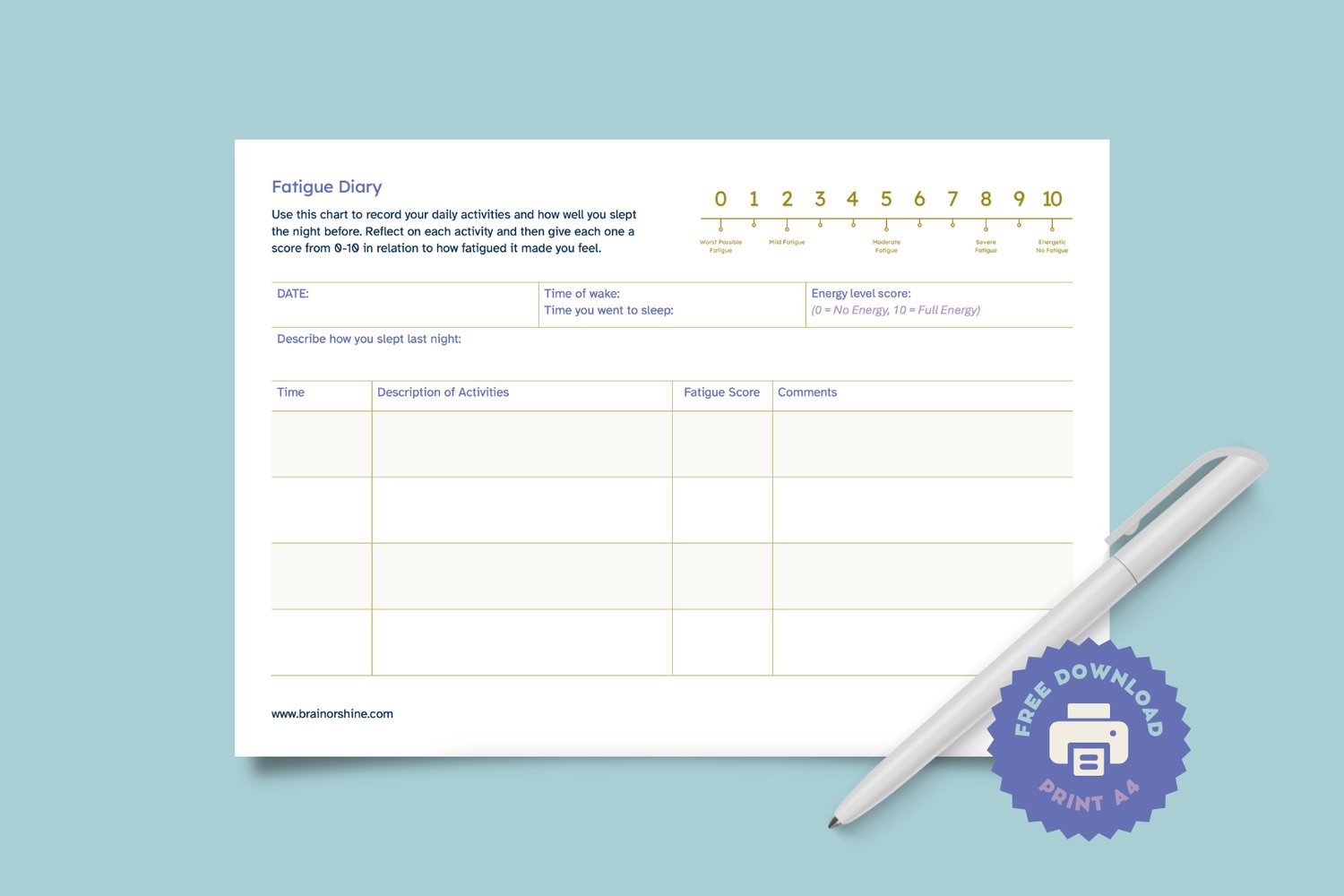
If you’re looking for a way to better understand your fatigue, try using our Fatigue Diary. This free resource makes it easy to track how you’re feeling day by day.
- Record how well you slept the night before.
- Note any activities you did throughout the day.
- Rate how tired you felt during those activities on a scale of 0-10.
Over time, you’ll start to notice patterns and triggers. By reflecting on this information, you can make informed decisions and tweak your routine to better manage your energy levels.
A Note for Loved Ones
If someone you care about has a brain injury, try to be patient and empathetic. It’s not always easy to understand how crushing this kind of fatigue can be, but listening and being supportive makes a huge difference. Avoid making assumptions or offhand comments that might dismiss what they’re going through.
"Fatigue is certainly a symptom that I suffer from and have spent many years working on ways to not let it fully rule our lives. One of the hardest parts of living with chronic fatigue is the lack of understanding of the illness and having to hear comments such as, 'Oh wow wish I got to take rests every afternoon'. Fatigue can be so debilitating, yet it's often quickly dismissed. Here at Brain or Shine, we aim to help anyone affected by a BI understand what fatigue is and how you can take steps to manage with it." ~ Mark
Living with chronic fatigue isn’t just about feeling tired. It’s an unpredictable and overwhelming condition that can affect every part of a person’s life. Taking things one step at a time is more than enough. With better awareness, communication, and support, BI survivors and their families can navigate these challenges together. If you’re feeling isolated or overwhelmed, talking to people in a similar situation to you can be reassuring. That’s why we created the Brain or Shine Community! It’s a private, peer-to-peer support group for those affected by brain injury.