

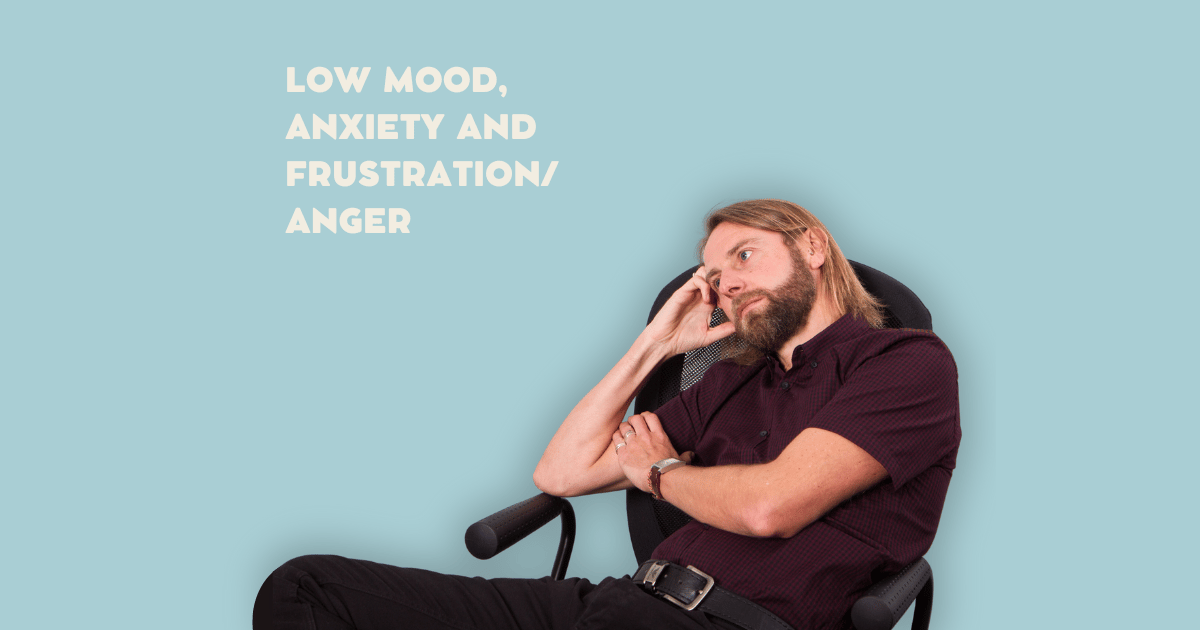
Traumatic Brain Injuries (TBIs) can have a profound impact on mental health and emotional well-being. People who have experienced TBIs often face various psychological challenges, including low mood, anxiety, and frustration/anger. In this blog post, let’s dive into these common side effects, explaining what they are, and how to recognise if you have them. We’ll also be giving you some coping skills and tools in our further blogs when we dive deeper into these common side effects.
Low Mood
What is Low Mood?
Low mood, also known as depression, is a persistent feeling of sadness, hopelessness, or disinterest in activities that were once enjoyed. Consistently being in a low mood can affect your overall quality of life and ability to function.
Are you able to Recognise your signs of Low Mood?
“Ever had that moment where you don’t want to admit that something is wrong? The positive guy doesn’t ever feel down surely? He doesn’t suffer anxiety, panic attacks and certainly not depression. I always thought that depression meant you’d shut yourself away and wallow in self-pity. Well, I certainly felt I looked fine, so I simply had to feel just fine. It took a number of years to understand how my mood was being affected by brain injury and the worst thing was not being able to communicate with those closest to me. Thankfully, getting support has helped me to find ways of opening up if I’m feeling low.” - Mark
Here are some ways low mood can present itself:
- Constant feelings of sadness or emptiness.
- Loss of interest or pleasure in activities once enjoyed.
- Fatigue, lack of energy, or decreased motivation.
- Changes in appetite, sleep patterns, or weight.
“Thankfully this doesn’t happen as much as in the first few years but when Mark did suffer, he would be difficult to talk to and would almost lock himself away in his own thoughts. One of the biggest things he stopped doing was socialising with friends and family.” - Jules
Anxiety
What is Anxiety?
Anxiety is a relentless feeling of worry, fear, or unease. It can manifest as physical symptoms, such as restlessness, rapid heartbeat, or shortness of breath, and can severely interfere with daily functioning.
“I guess I was anxious as a child but as I grew up, I became pretty laid back and nothing really bothered me. Since brain injury, things tend to worry me much more. It could be a really simple process, like filling in a form or going to an appointment and my levels would rise rapidly. In the past, I would sometimes be so anxious that it would lead to full-scale panic attacks and sometimes, make me physically sick.” - Mark
Recognising some symptoms of Anxiety:
- Excessive worry or fear about various aspects of life from things that have happened in the past to catastrophising what may happen in the future.
- Feeling restless, on edge, or easily startled.
- Physical symptoms like sweating, trembling, or a racing heartbeat.
- Avoidance of certain situations or activities due to fear or discomfort.
"Anxiety was one of the most brutal side-effects that we have had to deal with. Initially neither of us understood how anxiety presented itself and caused so many issues for us. It would come from nowhere and take over Mark to the point he couldn’t talk or express what was going on inside his head. Sometimes it would be processing the smallest of things that would get him shaking and looking like a rabbit in the headlights. Other times, for example, it would be a gradual build-up to a social get-together that would end up with him so anxious before we were just about to go, that he would be physically sick." - Jules
Frustration/Anger
What is Frustration/Anger?
Frustration and anger are emotional responses characterised by irritation, annoyance, or feelings of intense displeasure. These emotions may arise due to difficulties in communication, cognitive challenges, or changes in daily functioning.
“Thankfully, brain injury hasn’t made me an aggressive person, but it’s certainly made me snappier at times. I guess I can get irritated easily and, this can be when I don’t understand something that should be quite simple or if I feel that I’ve made a mistake and let someone down.” - Mark
Recognising Frustration/Anger:
- Feeling easily irritated, intolerant, or impatient.
- Frequent outbursts of anger or aggressive behaviour.
- Difficulty controlling emotions or managing anger.
- Physical symptoms like increased heart rate or tense muscles.
"This is another change in Mark’s personality that started quite early on and took us by surprise, to be honest. As not being aware of any changes that may occur, his sudden behavioural change to being irritated quickly and flashes of frustration and anger weren’t something we were accustomed to." - Jules
Do you suffer from any of these brain injury side effects?
Come Brain or Shine, we may look fine, but self-care is about taking out some time. It’s ok not to be ok at times and, definitely ok to rest. If you or someone you know experiences any of these side effects, then please do not hesitate to seek support and sign up to our webinar. Throughout our webinar programme, we will be discussing different brain injury side effects and ways to manage them. However, if you would like to discuss your symptoms with me, Mark, my wife Jules, or someone else that has been or is going through it, please join our Facebook community and ask away. No one has to be alone, let’s get through this together!
If you’d like to know more about these side effects, learn some coping mechanisms and tools, you can do this via our podcast, webinars and online programmes.